
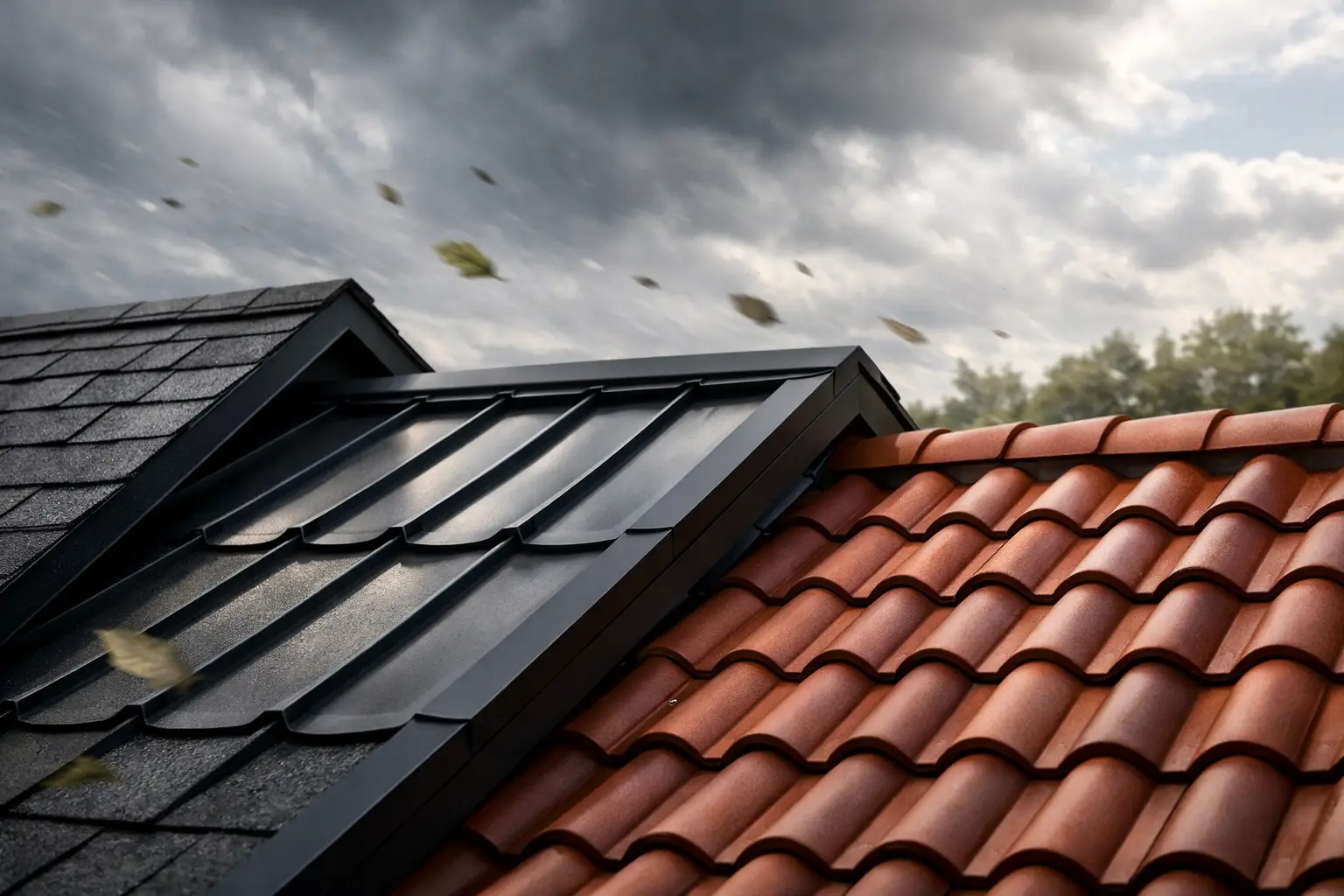
When a storm system rolls across Central Florida, your roof is the first line of defense between high winds and everything you have inside your home. The right choice in roofing materials can mean the difference between minor storm debris cleanup and tens of thousands of dollars in structural repairs. Understanding what makes a roof storm-ready will give you an edge before the next system moves in.
This guide looks at what makes roofing materials wind resistant, the options worth considering, and what homeowners need to know about installation, ratings, and practical performance. Central Florida weather doesn’t give many second chances once the season starts, so knowing your materials early is one of the smartest investments you can make.
What makes roofing materials wind resistant
Wind doesn’t just push against a roof from the outside. It creates uplift, changes pressure across surfaces, and pulls at edges and corners. During heavy winds, negative pressure pulls upward on the shingles, panels, or tiles, looking for any gap or weakness. Once wind gets underneath a roofing material, the force multiplies, and shingles or panels can start peeling away in sheets.
Wind resistance comes down to three things: the material itself, how securely it’s attached to the deck, and how the system seals along edges, ridges, and valleys. The best materials have high tensile strength, durable fasteners, and designs that resist uplift. But even the strongest material won’t hold if the installation cuts corners or skips key manufacturer specifications.
Wind resistant roofing materials homeowners should know
Asphalt shingles
Asphalt shingles remain the most popular choice for homes across Central Florida because they deliver a balance of cost, availability, and straightforward installation. But when it comes to high winds, not all shingles perform the same. Standard three-tab shingles are rated for lower wind speeds, often maxing out around 60 to 70 mph.
Architectural shingles, on the other hand, are heavier, thicker, and engineered for better wind resistance. Many architectural shingles carry ratings up to 110 mph or even 130 mph when installed with enhanced fastening patterns and proper starter strips. For homes in wind-prone areas, Class 4 impact-resistant shingles also offer extra protection against flying debris, which often accompanies high winds.
The takeaway: architectural shingles are worth the upgrade over basic three-tab. They handle wind better, last longer, and protect your home more reliably during the storm season. Just make sure the installer uses the correct nail count and follows high-wind installation guidelines.
Metal roofing
Metal roofing has earned its reputation as one of the most durable, wind-resistant options available. Standing seam metal roofs, where panels interlock with concealed fasteners, are especially effective because they eliminate exposed nail heads that wind and water can work loose over time.
Most metal roof systems can handle sustained winds from 140 to 160 mph or more, depending on the panel type and gauge. Because metal panels are wide and securely fastened, they don’t catch wind the way individual shingles can. They also hold up better against debris impact than traditional shingles.
The main consideration with metal is upfront cost. Metal roofing is an investment, but it typically lasts two to three times longer than asphalt, requires less maintenance, and provides superior wind performance. For homeowners planning to stay in their home long term, or for properties with high wind exposure, metal is tough to beat.
Concrete and clay tile
Tile roofs are an iconic part of Florida’s architectural style, and they bring serious weight to the fight against wind. Concrete and clay tiles are heavy, which naturally helps them resist uplift. Properly installed and fastened tile roofs can withstand winds between 125 and 150 mph.
The challenge with tile comes down to proper attachment and impact resistance. Because tiles are rigid, they can crack if struck by large flying debris. If a tile cracks or dislodges, wind can get underneath adjacent tiles and create a chain reaction. Proper underlayment is critical here, as it serves as the secondary barrier if a tile is compromised.
Weight is another factor. Concrete and clay tiles require a roof structure engineered to support their load. If you’re replacing shingles with tile, you’ll need an inspection to confirm the framing can handle the extra weight.
Synthetic roofing products
Synthetic slate and shake products, made from engineered polymers or rubber composites, have become an increasingly popular alternative. These materials offer the high-end look of natural slate or cedar shake with significantly less weight and improved impact resistance.
Many synthetic products carry wind ratings up to 110 to 130 mph and boast Class 4 impact resistance, meaning they stand up well against hail and windblown debris. They’re lighter than tile, so they don’t require structural reinforcement, and they won’t crack the way natural slate can. The tradeoff is cost—synthetics sit between architectural shingles and metal in price, and the installer base is smaller.
Why installation matters as much as the material
A wind-resistant material is only as good as the hands that install it. In fact, post-storm inspections routinely reveal that roof failures happen because of installation errors, not material failures. A high-wind rating on the package doesn’t mean much if the crew skips critical steps.
For shingles, proper nailing is everything. Nails must be placed at the right depth, angle, and location on the nail strip. Nails driven too high or too deep weaken the bond and reduce the shingle’s wind resistance dramatically. In high-wind areas, six nails per shingle is the standard, compared to the four-nail pattern used in lower-risk regions. Using the right starter strip along eaves and rakes is equally critical, as edges are where wind uplift starts.
Underlayment also plays a massive role. Secondary water barriers, such as self-adhering modified bitumen underlayment, keep water out even if the outer material is damaged or displaced. That layer can save your home from devastating interior damage.
How to compare wind ratings without getting lost
When comparing roofing materials, you’ll encounter ratings from ASTM, UL, and other testing organizations. The two big ones for shingles are ASTM D3161 (Class F covers winds up to 110 mph) and ASTM D7158 (Class H covers winds up to 150 mph). For metal and other systems, look for UL 580 or TAS 125 ratings, which measure uplift resistance.
Beyond the numbers on the package, look for products that carry Florida Product Approval or Miami-Dade Notice of Acceptance (NOA). These certifications require rigorous testing under high-velocity hurricane zone (HVHZ) standards and represent the gold standard for wind performance in Florida.
Don’t just look at the highest number on a brochure. Confirm whether the warranty matches the rating, what conditions apply, and whether the rated performance requires specific installation methods, like six-nail patterns or approved adhesives.
The best choice depends on your priorities
There isn’t a single “best” wind-resistant material for every homeowner. The right choice depends on your budget, how long you plan to stay in the home, your neighborhood aesthetic, and your home’s structural capacity. Architectural shingles offer the best balance of affordability and wind protection for most families. Metal is the top performer for homeowners who want maximum durability and are willing to invest upfront.
Tile is ideal for Mediterranean-style homes where aesthetics and weight work together, provided the structure can handle it. Synthetic materials offer a strong alternative for homeowners who want the look of premium materials without the structural weight or maintenance concerns.
Signs your current roof may not be ready for high winds
You don’t need to wait for a storm to find out if your roof is vulnerable. A quick ground-level inspection can reveal warning signs. Look for curling, cracked, or missing shingles. Check for granule loss in gutters, which indicates the protective surface is wearing down. Loose flashing around chimneys, vents, and valleys is another red flag, as wind loves to exploit weak seams.
Inside your attic, look for signs of water intrusion—dark stains on roof decking, damp insulation, or daylight coming through seams. If you see light coming through, wind and driven rain can find those same gaps. Addressing these issues before hurricane season arrives will prevent minor problems from turning into catastrophic failures.
Choosing a contractor is part of choosing the roof
The best wind-resistant material won’t perform if it isn’t installed correctly. That’s why choosing the right contractor is just as important as choosing the material. In Central Florida, you want a licensed, insured roofing contractor who understands local building codes, wind zone requirements, and manufacturer-certified installation practices.
Ask prospective contractors about their experience with high-wind installations. Find out how many nails they use per shingle, what underlayment they recommend, and whether they follow manufacturer guidelines for wind warranty coverage. A reputable contractor will be transparent about their methods and materials.
The right roof protects your home, your family, and your investment when the weather turns severe. Taking the time to choose the right material and the right crew to install it ensures that when high winds roll through Central Florida, your roof is ready to stand strong.