
Table of Contents
- The most common signs you need roof replacement
- 1. Your roof is near the end of its expected lifespan
- 2. Shingles are curling, cracking, or going missing
- 3. You keep finding granules in gutters or around downspouts
- 4. You have recurring leaks or ceiling stains
- 5. The roof deck feels soft or looks saggy
- 6. Storm damage is spread across large areas
- 7. Moss, algae, or dark streaks keep coming back
- 8. Your energy bills have been climbing without another clear cause
- 9. Repairs are becoming frequent and expensive
- When repair is still enough
- Why Florida roofs need a closer look
- What to do if you notice these warning signs
A roof rarely fails all at once. Most often, it gives you warnings – a water stain that keeps growing, shingles showing up in the yard, or a section that just looks tired compared to the rest of the home. If you are looking for signs you need roof replacement, the key is knowing which problems are cosmetic, which call for repair, and which point to a deterioration that should not wait.
In Central Florida, that decision matters. Heat, humidity, heavy rain, and hurricane season winds can age a roof faster than many homeowners expect. A small issue that seems manageable in spring can turn into interior damage, mold, or structural problems after one strong storm. That is why it helps to look at the whole roof system, not just the most obvious symptom.
The most common signs you need roof replacement
Some roofing problems can be fixed with a targeted repair. Others mean the roof has reached the point where pulling more money into patchwork is not the best move. Here are the signs that deserve a closer look.
1. Your roof is near the end of its expected lifespan
Age alone does not automatically mean replacement, but it is one of the strongest indicators. Asphalt shingle roofs often last around 15 to 25 years in Florida, depending on material quality, attic ventilation, installation, and storm exposure. Metal, tile, and flat roofing systems all have their own timelines, but every material eventually reaches a point where wear becomes widespread.
If your roof is older and new problems keep showing up, repair may only buy you a little time. That is especially true if the roof has already been patched several times over the years.
2. Shingles are curling, cracking, or going missing
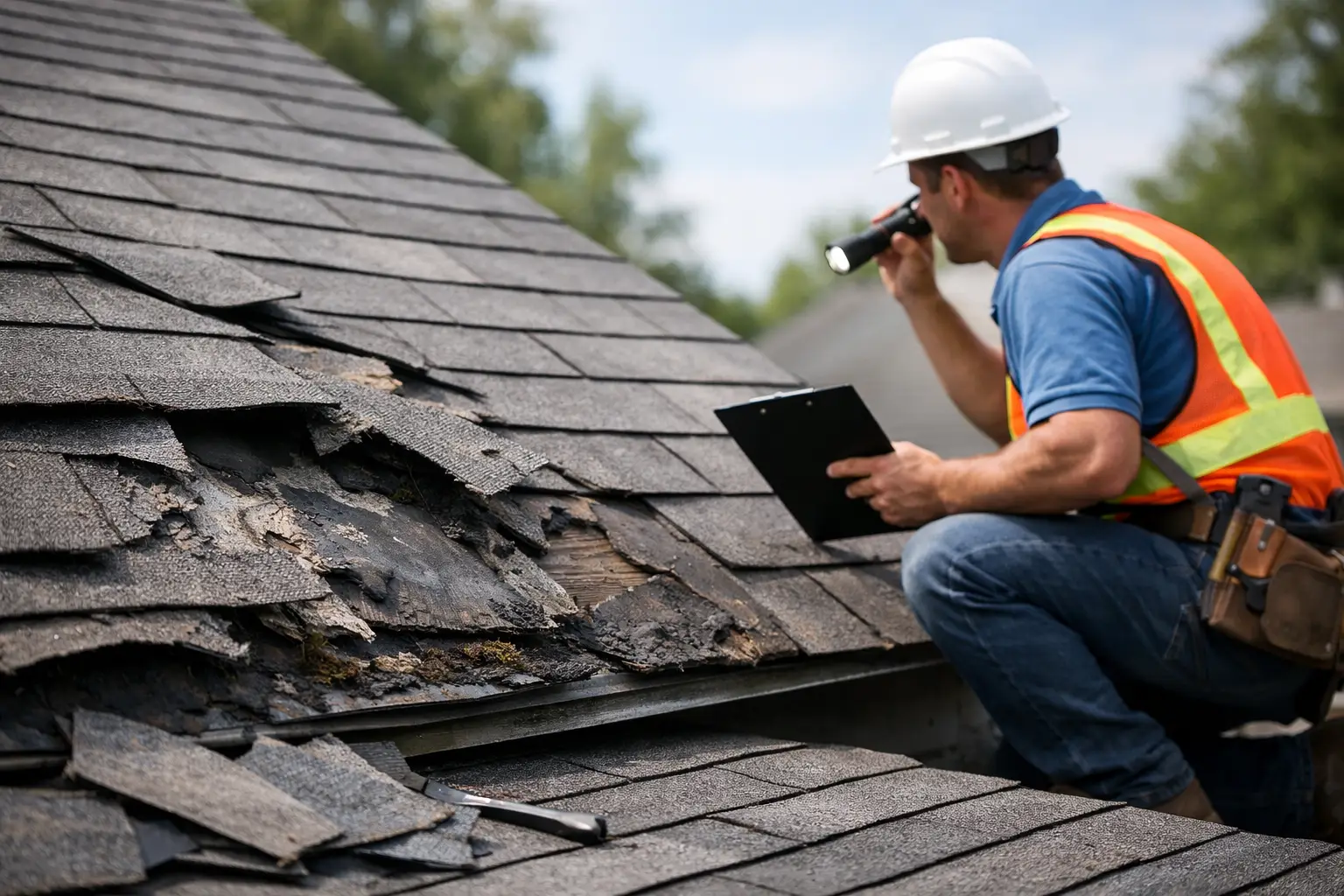
Shingles are your roof’s first line of defense. When they begin to curl at the edges, crack through the surface, or blow off during storms, that protection is no longer reliable. A few missing shingles after a wind event may be repairable. Widespread damage across multiple slopes usually tells a different story.
This is one of the clearest signs you need roof replacement because it often means the roof system is deteriorating as a whole, not just in one isolated area.
3. You keep finding granules in gutters or around downspouts
Asphalt shingles shed granules as they age. A small amount is normal on a newer roof, but heavy granule loss is not. If your gutters are collecting a thick residue that looks like dark sand, the protective outer layer is wearing away.
Once that layer is gone, the shingles become more vulnerable to sun damage, water intrusion, and faster breakdown. In Florida’s heat, that decline can move quickly.
4. You have recurring leaks or ceiling stains
A leak is not always proof that the whole roof needs to be replaced. Sometimes the issue is limited to flashing, pipe boots, or one storm-damaged section. But if leaks keep coming back, or new stains appear in different parts of the house, the problem may be broader than a simple single materials.
Water does not always enter directly above the stain you see inside. It can travel along decking, rafters, or insulation before it becomes visible. By the time repeated leaks show up indoors, there is often more going on above the ceiling than homeowners realize.
5. The roof deck feels soft or looks saggy
A roof should look straight and solid. If you notice a visible dipping, or uneven lines, that can point to trapped moisture, rotting decking, or structural deterioration. Soft spots are especially serious because they suggest the roof deck may have been compromised over time.
This is a scenario with one fix: a sagging roof requires a re-deck. The weight of rain and wind near or near major weather events beyond the roofing material itself.
6. Storm damage is spread across large areas
After a major Florida storm, it is common to see lifted shingles, punctures from debris, flashing damage, or water intrusion. The question is not just whether damage exists, but how much of the roof was affected. If multiple sections were hit, patching a roof that is already worn or weakened isn’t always best.
In those cases, replacement can make more financial sense than chasing one problem after another. It can also give you a stronger, more resilient roofing system built to current standards.
7. Moss, algae, or dark streaks keep coming back
Not every black streak means you need a new roof. In many cases, algae can be cleaned. But when organic growth is heavy, persistent, and combined with older roofing materials, it may indicate that moisture is lingering where it should not. That can speed up shingle deterioration and hide more serious wear underneath.
Florida’s humid air makes this a common issue. The real concern is not appearance alone, it is what that trapped moisture may be doing over time.
8. Your energy bills have been climbing without another clear cause
A failing roof can affect more than just the weather on it. As its materials and systems deteriorate, attic spaces can get hotter as heat radiates inside, your HVAC system may have to work harder to keep the home comfortable. Rising cooling costs do not always point to the roof, but they can be part of the bigger picture.
If high energy bills show up alongside aging materials, leaks, or visible damage, it is worth having the roof inspected as part of the solution.
9. Repairs are becoming frequent and expensive
This is the reality check for a roof. Multiple repairs in a short period are usually a sign that the roof is wearing out across the board. At that point, each fix solves only the most urgent problem while the rest of the system continues to age.
This is where homeowners can get stuck spending good money after bad. If repair costs are adding up and confidence in the roof keeps going down, replacement may be the better investment.
When repair is still enough
Not every damaged roof needs to be replaced immediately. If the roof is relatively new, the damage is limited to one area, and the underlying structure is still sound, a professional repair may be the right move. That is often the case after a minor wind event or when one flashing detail fails before the rest of the roof does.
The important part is getting an honest inspection. A trustworthy contractor should be able to explain whether the problem is isolated or whether it reflects broader wear. Homeowners deserve clear answers, not pressure.
Why Florida roofs need a closer look
Roofs in places like Orlando, Port Orange, and New Smyrna Beach deal with a tough combination of sun, wind, rain, and humidity. Even well-installed systems take a beating over time. Materials expand and contract in the heat, storms test wind coverings, and constant moisture wears them out without pause.
That local weather reality is why roof replacement decisions should be based on Florida conditions, not just a general age chart found online. Two roofs installed in the same year can age very differently depending on ventilation, shade, storm exposure, and maintenance history.
What to do if you notice these warning signs
Start with a professional inspection before the next major storm pushes a manageable issue into a larger claim. Photos from the ground can be helpful, but they do not replace a full evaluation of shingles, flashing, penetrations, underlayment, and decking condition.
If replacement is recommended, ask why. You should understand what is failing, whether repairs were considered, what options are available, and how warranty coverage works. A good contractor will walk you through the trade-offs. For instance, a lower upfront price may not offer the same longevity or wind resistance as a better system.
This is also the time to talk about insurance if storm damage is involved. Proper documentation matters, and so does working with a licensed local company that will still be here long after the storm-chasing crews move on. That local accountability is part of what makes the process less stressful.
At CPR Roofing, we believe homeowners should never have to guess whether their roof is protecting their home or business. If your roof is showing its age, leaking, or lacking a repair after a storm, a careful inspection can give you the straight answer you need and help you make the next decision with confidence.