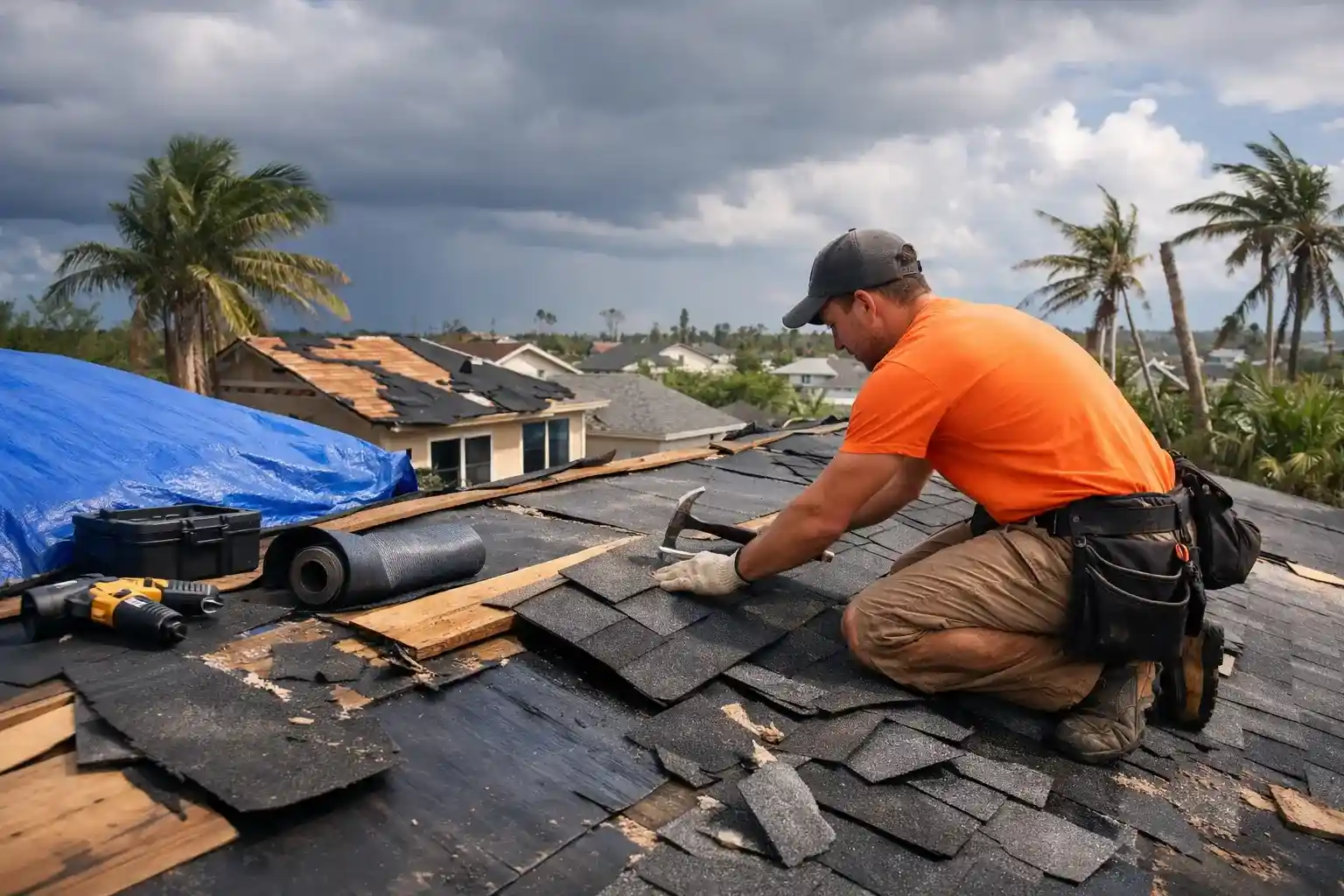
What hurricane damage really looks like on a Florida roof
Not all storm damage is obvious from the ground. Yes, missing shingles and torn flashing are common, but some of the most expensive problems start where homeowners cannot easily see them. On asphalt shingle roofs, high winds can lift tabs, break seals, and crease shingles without fully tearing them off. That kind of damage weakens the roof system and shortens its remaining life, even if it still looks mostly intact from the driveway.
Tile roofs have their own issues. A hurricane can crack tiles, shift them out of place, or damage the underlayment beneath them. Metal roofs may hold up well in high winds, but fasteners, seams, and flashing details can still fail. Flat and low-slope commercial roofs often suffer membrane punctures, edge damage, or pooling problems after heavy rain and debris impact.
Then there is water intrusion. Once wind-driven rain gets beneath the outer roofing material, damage spreads beyond the roof itself. Insulation gets wet, roof decking begins to deteriorate, and interior drywall or framing can take a hit. By the time a stain appears on a ceiling, the moisture path may already be larger than expected.
Roof repair after hurricane Florida property owners should prioritize first
The first priority is safety. Stay off the roof unless you are trained and equipped to inspect it safely. After a hurricane, surfaces can be slick, soft, or unstable, and loose materials can shift underfoot. It is far better to check from the ground, document what you can see, and bring in a licensed roofing professional.
If active leaking is happening, temporary protection should happen quickly. A tarp can help limit interior damage, but it needs to be installed correctly to do its job and avoid causing more harm. Poorly secured tarps often fail in the next storm or pull against already weakened sections of the roof.
Documentation should happen as soon as possible. Take clear photos of exterior damage, interior leaks, wet insulation, stained ceilings, and any debris impacts. Keep notes on when the damage appeared and what conditions you observed. If an insurance claim becomes part of the process, that record helps.
The next move is a full inspection, not just a quick patch. A proper assessment looks at surface materials, flashing, penetrations, valleys, underlayment performance, decking condition, and signs of water migration inside the attic or structure. That is the only way to know whether you are dealing with isolated repairs or broader storm restoration.
Repair or replace? It depends on the full picture
A lot of Florida property owners ask this right away, and the right answer is not always the one they expect. If the damage is limited to a small section and the rest of the roof system is still in solid condition, a targeted repair may be the smart move. That is especially true when the roof is newer and matching materials are available.
But repairs are not always the most cost-effective choice. If the roof is already near the end of its service life, if storm damage is spread across multiple areas, or if water intrusion has reached the decking and underlayment, replacement may make more sense. The same goes for roofs with repeated past repairs. At some point, continuing to patch weak areas becomes more expensive than fixing the root problem.
Florida code considerations can also affect the decision. Depending on the extent of damage and the roof type, code upgrades may come into play during restoration. That is one reason local experience matters so much. A contractor who works in Central Florida every day understands the regional weather, permitting expectations, and roofing systems that perform best here.
Why fast action matters after a hurricane
Waiting a week or two may not sound like a big deal, especially if leaks seem to stop once the weather clears. But storm damage often gets worse quietly. Lifted shingles keep losing adhesion. Small flashing gaps let in more rain. Wet decking stays trapped beneath roofing materials and starts breaking down over time.
There is also the insurance side. If damage is documented late, or if additional deterioration happens because temporary protection was delayed, the process can get more complicated. Acting quickly does not mean rushing into a full contract with the first company that knocks on your door. It means getting the roof inspected by a trusted local professional and making informed decisions before minor damage becomes major.
That local piece matters. After every big storm, out-of-town crews show up promising fast work and low prices. Some do poor repairs, disappear when warranty issues come up, or push full replacements before a roof has even been properly evaluated. A local, licensed, insured contractor has a reputation to protect in the same community you live in.
How to avoid costly mistakes during roof repair after hurricane Florida
When it comes to roof repair after hurricane Florida storms, one of the biggest mistakes is assuming no visible leak means no real damage. Hurricane winds can compromise a roof long before water shows up inside. Another is choosing based on price alone. A cheap repair that ignores damaged underlayment, failed flashing, or soft decking is usually not cheap for long.
It is also common for property owners to sign paperwork too quickly in the chaos after a storm. Before agreeing to any work, make sure you understand the scope, materials, warranty coverage, and whether the contractor is actually local and properly credentialed. Ask who will perform the work, what temporary measures are included, and how cleanup will be handled.
Good contractors should be able to explain what they found in plain language. You should not need a roofing background to understand whether your home needs a minor repair, storm restoration, or replacement. Clear communication is part of the job.
What hurricane damage really looks like on a Florida roof
Not all storm damage is obvious from the ground. Yes, missing shingles and torn flashing are common, but some of the most expensive problems start where homeowners cannot easily see them. On asphalt shingle roofs, high winds can lift tabs, break seals, and crease shingles without fully tearing them off. That kind of damage weakens the roof system and shortens its remaining life, even if it still looks mostly intact from the driveway.
Tile roofs have their own issues. A hurricane can crack tiles, shift them out of place, or damage the underlayment beneath them. Metal roofs may hold up well in high winds, but fasteners, seams, and flashing details can still fail. Flat and low-slope commercial roofs often suffer membrane punctures, edge damage, or pooling problems after heavy rain and debris impact.
Then there is water intrusion. Once wind-driven rain gets beneath the outer roofing material, damage spreads beyond the roof itself. Insulation gets wet, roof decking begins to deteriorate, and interior drywall or framing can take a hit. By the time a stain appears on a ceiling, the moisture path may already be larger than expected.
Roof repair after hurricane Florida property owners should prioritize first
The first priority is safety. Stay off the roof unless you are trained and equipped to inspect it safely. After a hurricane, surfaces can be slick, soft, or unstable, and loose materials can shift underfoot. It is far better to check from the ground, document what you can see, and bring in a licensed roofing professional.
If active leaking is happening, temporary protection should happen quickly. A tarp can help limit interior damage, but it needs to be installed correctly to do its job and avoid causing more harm. Poorly secured tarps often fail in the next storm or pull against already weakened sections of the roof.
Documentation should happen as soon as possible. Take clear photos of exterior damage, interior leaks, wet insulation, stained ceilings, and any debris impacts. Keep notes on when the damage appeared and what conditions you observed. If an insurance claim becomes part of the process, that record helps.
The next move is a full inspection, not just a quick patch. A proper assessment looks at surface materials, flashing, penetrations, valleys, underlayment performance, decking condition, and signs of water migration inside the attic or structure. That is the only way to know whether you are dealing with isolated repairs or broader storm restoration.
Repair or replace? It depends on the full picture
A lot of Florida property owners ask this right away, and the right answer is not always the one they expect. If the damage is limited to a small section and the rest of the roof system is still in solid condition, a targeted repair may be the smart move. That is especially true when the roof is newer and matching materials are available.
But repairs are not always the most cost-effective choice. If the roof is already near the end of its service life, if storm damage is spread across multiple areas, or if water intrusion has reached the decking and underlayment, replacement may make more sense. The same goes for roofs with repeated past repairs. At some point, continuing to patch weak areas becomes more expensive than fixing the root problem.
Florida code considerations can also affect the decision. Depending on the extent of damage and the roof type, code upgrades may come into play during restoration. That is one reason local experience matters so much. A contractor who works in Central Florida every day understands the regional weather, permitting expectations, and roofing systems that perform best here.
Why fast action matters after a hurricane
Waiting a week or two may not sound like a big deal, especially if leaks seem to stop once the weather clears. But storm damage often gets worse quietly. Lifted shingles keep losing adhesion. Small flashing gaps let in more rain. Wet decking stays trapped beneath roofing materials and starts breaking down over time.
There is also the insurance side. If damage is documented late, or if additional deterioration happens because temporary protection was delayed, the process can get more complicated. Acting quickly does not mean rushing into a full contract with the first company that knocks on your door. It means getting the roof inspected by a trusted local professional and making informed decisions before minor damage becomes major.
That local piece matters. After every big storm, out-of-town crews show up promising fast work and low prices. Some do poor repairs, disappear when warranty issues come up, or push full replacements before a roof has even been properly evaluated. A local, licensed, insured contractor has a reputation to protect in the same community you live in.
How to avoid costly mistakes during roof repair after hurricane Florida
One of the biggest mistakes is assuming no visible leak means no real damage. Hurricane winds can compromise a roof long before water shows up inside. Another is choosing based on price alone. A cheap repair that ignores damaged underlayment, failed flashing, or soft decking is usually not cheap for long.
It is also common for property owners to sign paperwork too quickly in the chaos after a storm. Before agreeing to any work, make sure you understand the scope, materials, warranty coverage, and whether the contractor is actually local and properly credentialed. Ask who will perform the work, what temporary measures are included, and how cleanup will be handled.
Good contractors should be able to explain what they found in plain language. You should not need a roofing background to understand whether your home needs a minor repair, storm restoration, or replacement. Clear communication is part of the job.
What a strong storm-damage inspection should include
A real hurricane inspection goes beyond spotting obvious missing materials. It should evaluate shingles or tiles for wind lift, cracks, and displacement. It should check flashing at chimneys, walls, valleys, skylights, and vents. It should assess ridge caps, exposed fasteners, sealant points, soffits, fascia, and gutter line impacts.
Inside the property, attic inspection is just as important. Water stains, damp insulation, mold risk, and decking discoloration can reveal damage that the exterior alone does not show. On commercial buildings, drainage performance, membrane seams, rooftop equipment penetrations, and edge securement all deserve close attention.
This is where a free roof inspection can be a real advantage when it is offered by a reputable local company that is focused on long-term service, not quick storm volume. Companies like GRIT Roofing have built trust in this region by treating storm response as a serious protection issue, not a sales gimmick.
Choosing a Florida contractor you can trust
After a hurricane, trust is not a small thing. Your roof protects your family, your business, and one of your biggest investments. The contractor you choose should be licensed, insured, experienced with hurricane damage, and able to stand behind workmanship with real warranty support.
It also helps to work with a company that understands the full process, from inspection to repair recommendations to insurance documentation when needed. That kind of support lowers stress and helps property owners make better decisions. You want a team that knows Florida roofs, knows local weather patterns, and will still be here long after storm season ends.
The best roof repair after hurricane Florida services are not just about replacing damaged materials. They are about restoring confidence in the system above your head. Done right, a repair should address the cause of the failure, reinforce vulnerable areas, and give you a roof that is ready for the next storm, not just patched for the week.
If your property took a hit this hurricane season and requires roof repair after hurricane Florida, do not guess and do not wait for a small stain to become a major interior repair. Get the roof checked, get clear answers, and work with people who know this area and stand behind their work. Peace of mind starts with knowing your roof is truly secure.