
Table of Contents
A Florida storm does not wait until it is convenient. One afternoon of wind and rain can leave you with missing shingles, a ceiling stain, and a lot of questions about what your policy will actually cover. If you are looking for insurance claim roof damage help, the biggest advantage is acting early, documenting carefully, and working with a local roofing contractor who knows what storm damage really looks like in this part of the state.
For many homeowners, the hardest part is not spotting the leak. It is figuring out what happens next. Insurance companies have their own process. Roofing systems have their own realities. And if those two do not line up clearly from the start, the claim can drag out longer than it should. Getting the right insurance claim roof damage help early on can bridge this gap.
What insurance claim roof damage help should actually include
Good insurance claim roof damage help is not just someone telling you to file a claim and hope for the best. It should start with a thorough roof inspection, clear photo documentation, and an honest explanation of whether the damage appears claim-worthy or better handled as a direct repair.
That distinction matters. Not every roof issue belongs in an insurance claim. Wear from age, long-term deterioration, poor attic ventilation, prior faulty workmanship, and maintenance neglect are often treated very differently from sudden storm damage. If a contractor pushes every homeowner to file no matter what, that is usually a red flag. A trustworthy roofer should tell you when a roof repair makes more sense than involving your carrier.
Real support also means helping you understand the language around the claim. Homeowners often hear terms like deductible, actual cash value, replacement cost value, depreciation, and scope of loss without much context. Providing proper insurance claim roof damage help means translating this process into plain English so you do not feel lost before the process even begins.
Start with the condition of the roof, not the paperwork
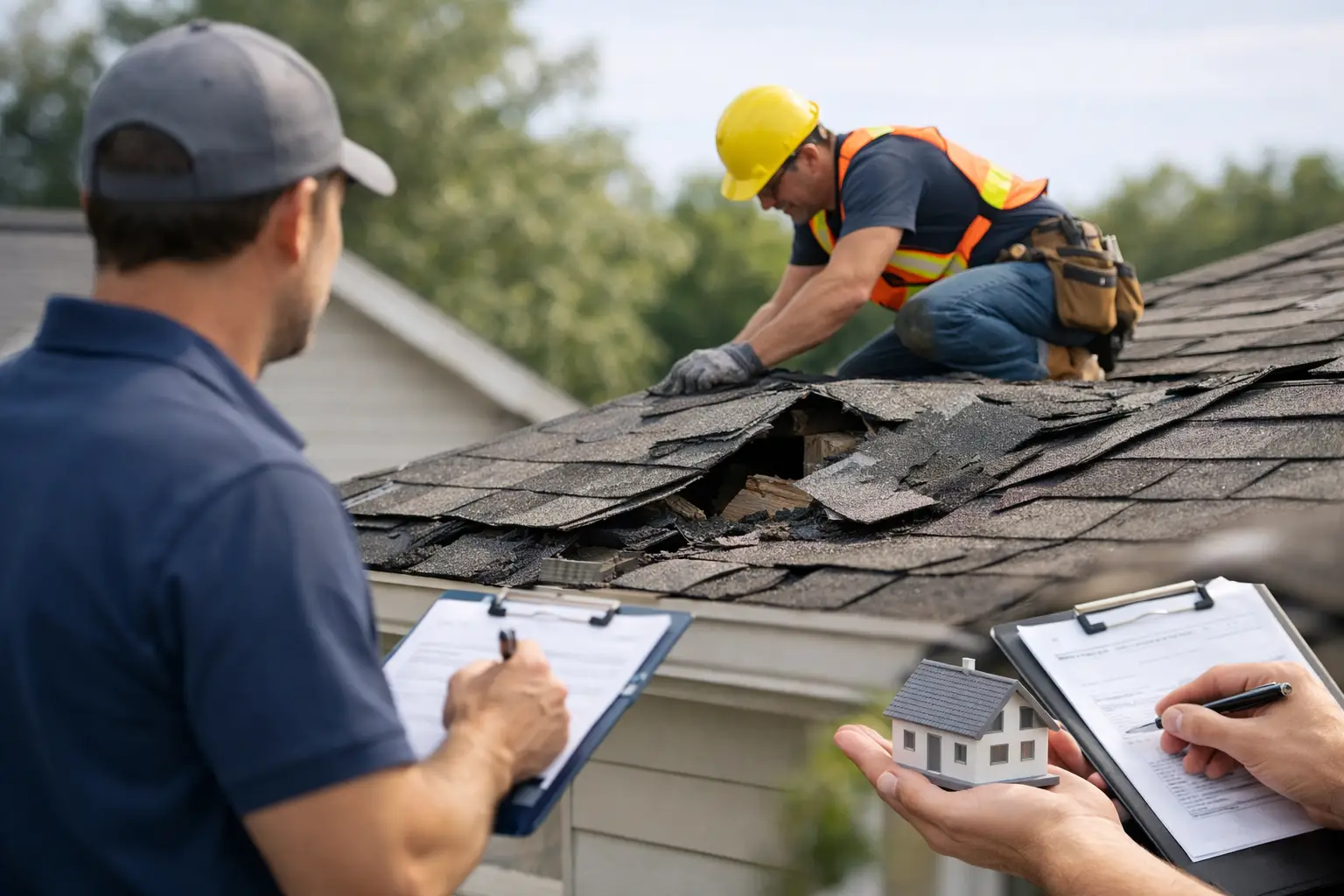
The claim should begin on the roof itself. Before anyone talks numbers, there needs to be a solid assessment of what happened and where the damage came from. On Florida roofs, that can include lifted shingles, creased tabs, punctures from debris, damaged flashing, ridge cap loss, underlayment exposure, and water intrusion around vulnerable penetrations.
A proper inspection should also look beyond the obvious. Storm damage is not always dramatic from the ground. A roof can appear mostly intact but still have enough wind-related damage to compromise its service life. On the other hand, some signs that worry homeowners turn out to be older wear that is unrelated to the recent storm. This is where experience matters.
Inside the home, stains, bubbling drywall, or damp insulation may support the timeline of damage, but interior signs alone do not always prove the roof is the source. The inspection needs to connect the dots carefully.
What to do right after storm damage
If your roof has been hit, your first job is protecting the property from additional loss. That might mean placing a tarp over an exposed area or arranging temporary dry-in work if water is getting inside. Most policies expect homeowners to take reasonable steps to prevent damage from getting worse.
At the same time, document what you can safely see. Take photos of fallen shingles, dented metal components, visible leaks, ceiling stains, and any debris impact around the property. If you know the date of the storm, write it down. Save any emergency service invoices and keep notes on when the damage was first noticed.
Do not climb onto a storm-damaged roof yourself. A professional inspection is safer and usually more useful, because the photos and notes should be detailed enough to support the claim if one is filed. Professional insurance claim roof damage help ensures these critical details aren’t missed.
How the roof insurance claim process usually works
Once damage has been identified, the next step is filing the claim with your insurance company. That starts the official process, and the carrier will usually assign an adjuster to inspect the property. The adjuster is there to evaluate the reported damage and determine what the policy covers.
This is one of the most misunderstood parts of the process. The adjuster is not your roofing contractor, and your roofing contractor is not the adjuster. They have different roles. The adjuster interprets policy coverage and pricing from the carrier side. The contractor evaluates the actual roof system, the labor and materials required, and the code or installation realities involved in restoring it properly. When you have reliable insurance claim roof damage help, your contractor can properly advocate for the realities of the roof restoration.
Ideally, those perspectives meet in a way that produces a fair scope of work. Sometimes they do. Sometimes key items are missed, especially on complex roofs or storm claims where damage is scattered across several components. When that happens, strong documentation becomes essential.
Where claims often get delayed or underpaid
Most roofing claim problems do not come from one big mistake. They come from smaller gaps. Photos may be incomplete. The storm date may be unclear. The initial inspection may not identify all damaged areas. The estimate may leave out accessory items like flashing, vents, starter materials, ridge components, or code-required upgrades. This is exactly why thorough insurance claim roof damage help matters so much.
Another common issue is timing. Homeowners may wait too long because the leak seems minor, or because they assume a few missing shingles are not a major concern. But delayed reporting can make it harder to separate new storm damage from ongoing deterioration. Insurance carriers often look closely at that timeline.
Then there is the contractor problem. After major weather events, out-of-town crews often flood Florida neighborhoods. They may promise quick claim approval, pressure you to sign before the roof is fully evaluated, or disappear once the job gets complicated. A local, licensed, insured contractor has more at stake. They are still here after the storm, and that accountability matters.
Insurance claim roof damage help from a local roofer
The best insurance claim roof damage help usually comes from a contractor who understands both roofing systems and local storm patterns. In Central Florida, roofs take a beating from wind, heat, heavy rain, and hurricane-season exposure. That means the damage patterns here are not always identical to what a generic national claims script expects.
A local roofer can help document the full condition of the roof, meet with the adjuster when appropriate, and explain why certain repairs or replacements are necessary. That does not mean inflating a claim or making promises no one can guarantee. It means presenting the roof honestly and thoroughly so the carrier is making a decision based on complete information.
That local piece also matters after approval. If the claim includes approved work, you still need a contractor who can complete it correctly, use quality materials, and stand behind the workmanship. The claim is only part of the process. The roof itself still has to protect your home for years to come.
Repair or replacement depends on more than damage alone
Homeowners often want a simple answer here, but it depends. The extent of damage matters, of course, but so do the roof’s age, material type, repairability, and whether matching materials are available. A newer roof with isolated storm damage may be a strong repair candidate. An older roof with widespread wind damage and brittle shingles may point toward a roof replacement.
Building code can also affect the outcome. In some cases, required upgrades or related components can change the scope of work significantly. That is why a claim should never be treated like a one-line item. Roofing systems are built in layers, and one damaged area can affect more than what is visible at first glance.
If you are hearing very different opinions, ask each party to explain why. A good contractor should be able to walk you through the condition of the roof in plain terms, not just tell you what you want to hear.
How to protect yourself during the process
Stay organized. Keep a folder with inspection notes, claim numbers, adjuster contact information, photos, emails, estimates, and any documents your carrier sends. If something changes, write down when it changed and who said what.
Read what you sign. That sounds obvious, but after storm damage, many people sign contingency forms or work authorizations before they fully understand the contractor relationship. There is nothing wrong with moving quickly when your home needs attention. There is a problem when quick action replaces careful decision-making.
It also helps to ask one direct question early: if this claim is approved, what exactly is included in the work? Materials, underlayment, flashing, ventilation details, permit responsibilities, cleanup, and warranty coverage should all be discussed before the project starts.
For homeowners in places like DeLand and the surrounding Central Florida area, the safest path is usually simple – get the roof inspected promptly, document everything, and work with a local contractor who knows the region, knows the codes, and will still answer the phone after the job is done.
Storm claims can feel stressful because they mix damage, deadlines, and money all at once. But when the roof is inspected honestly and the process is handled with clear communication, finding trusted insurance claim roof damage help turns a stressful situation into a manageable one to protect what matters most.