
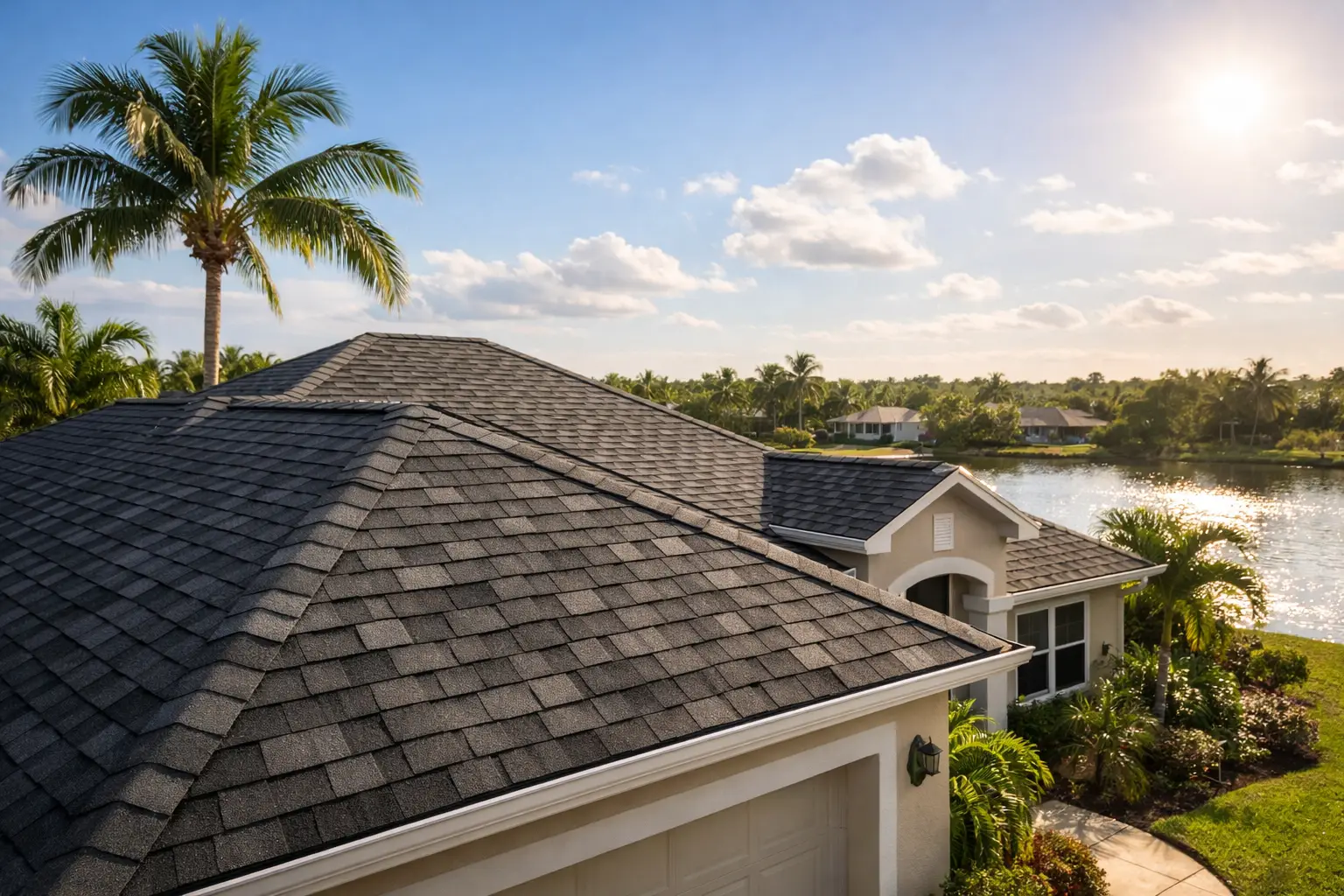
That is why picking the best shingles for Florida homes is not just about color or price. It is about how well your roof will hold up when the weather stops being polite.
For most homeowners, asphalt shingles are still the most practical choice. They are cost-effective, widely available, and can perform very well in Florida when you choose the right product and make sure it is installed correctly.
The key to finding the best shingles for Florida homes is knowing which features matter here and which ones are mostly marketing.
What makes shingles right for Florida
Florida roofing decisions come down to performance first. A shingle that works fine in a mild climate may not be a smart choice here.
Between hurricane season, year-round UV exposure, and the constant moisture that feeds algae growth, your roof is asked to do a lot more than just cover the house.
Wind resistance is usually the first thing homeowners ask about, and for good reason. In many parts of Central Florida, strong wind ratings are not optional.
A better shingle should be rated to handle high winds when paired with the right underlayment, starter strips, ridge components, and nailing pattern. That last part matters more than many people realize. Even a premium shingle can fail early if it is installed carelessly.
Heat resistance matters too, though not always in the way people expect. Shingles are going to get hot in Florida no matter what.
The better question is whether they can tolerate years of sun without breaking down too quickly. Quality shingles hold their granules better, resist cracking, and maintain their structure longer under constant UV exposure.
Then there is algae resistance. In Florida’s humidity, dark streaks from algae are common, especially on shaded roof slopes.
That does not always mean the roof is failing, but it does affect curb appeal and can make a fairly new roof look old. Shingles with built-in algae resistance are worth serious consideration here.
The best shingles for Florida homes are usually architectural
If you are comparing options, architectural asphalt shingles are often the strongest fit. When evaluating the best shingles for Florida homes, these thicker, more durable shingles outperform basic 3-tab versions.
They usually come with better wind ratings and longer warranties. They also tend to look better, which matters if you care about resale value or just want your home to look sharp.
3-tab shingles are cheaper upfront, but they generally offer less wind resistance and shorter lifespans in a state where storms are a regular part of life.
That lower entry price can become expensive over time. For many homeowners, paying more for architectural shingles is the better long-term decision.
Premium designer shingles also exist, and some are excellent. They can offer enhanced durability and a more dimensional appearance, sometimes designed to mimic slate or wood shake.
But they come at a noticeably higher cost. For the average homeowner, architectural shingles usually hit the sweet spot between protection, appearance, and value.
Features to look for in Florida-rated shingles
When homeowners ask about the best shingles for Florida homes, the answer usually comes down to a short list of performance features rather than just a logo brand.
Start with a strong wind rating. Many quality architectural shingles carry wind warranties up to 130 mph when installed as part of a complete roofing system.
That does not mean your roof is hurricane-proof, but it does mean the material is built for more serious weather.
Next, look for algae-resistant technology. Manufacturers often include copper-infused or similar protective granules that help slow black streaking.
This is especially useful in humid areas and neighborhoods with tree cover.
Impact resistance may also be worth considering depending on your budget and location. While hail is not the same threat in Florida as in some other states, impact-rated shingles can provide an extra layer of durability against flying debris and storm-related wear.
A solid manufacturer warranty matters, but it should never be the only selling point. Warranties often depend on proper installation and full system components.
If a contractor talks only about warranty years without discussing ventilation, underlayment, flashing, and installation details, that is a red flag.
Color matters more than people think
Shingle color is often treated like a design choice, but in Florida, it can affect performance too. Lighter colors generally reflect more heat than darker ones, which can help reduce attic temperatures.
This does not automatically mean lower energy bills in every home, but it can make a difference, especially when combined with proper attic ventilation and insulation.
That said, color should not override product quality. A dark architectural shingle from a trusted manufacturer is still a better choice than a cheaper light-colored shingle that cannot hold up to Florida conditions.
When searching for the best shingles for Florida homes, the wisest decision balances appearance, neighborhood style, heat considerations, and overall product performance.
Installation is just as important as the shingle itself
This is the part homeowners sometimes do not hear until after something goes wrong. The best material in the world cannot make up for poor workmanship.
In Florida, correct installation is everything. That includes meeting the latest Florida Building Code standards, using the right fastening method, and installing proper starter shingles.
It also means sealing vulnerable areas, and making sure the roof system works together from decking to ridge. If one part of that process is rushed or skipped, the roof can become vulnerable long before the shingles themselves wear out.
This is one reason local experience matters. A contractor who understands Florida codes, local weather patterns, ventilation needs, and storm exposure is much likely to recommend a system that makes sense for your specific home.
That is very different from getting a generic pitch from someone who just showed up after a storm.
When asphalt shingles may not be your best option
Asphalt shingles are the right fit for many homes, but not every home. If your property has a very low roof slope, your contractor may recommend another roofing system.
If you are planning to stay in your home for decades and have the budget for a higher-end material, metal roofing may be worth comparing.
Metal roofs perform very well in Florida and can offer excellent longevity and wind resistance. They also cost more upfront.
For many homeowners, however, the best shingles for Florida homes remain the practical choice because they provide strong protection at a more accessible price point.
The point is not that one material is always best. It depends on your home, your budget, your plans for the property, and how much value you place on lifespan, appearance, and maintenance.
How to choose the right shingle for your home
A good roofing decision starts with an honest inspection. If your roof is aging, has storm damage, or has started showing signs like lifted shingles, granule loss, staining, or recurring leaks, it is time to get a professional opinion.
Not every roof needs full replacement, but if replacement is the right move, the shingle you choose should match Florida conditions first and style second.
Ask direct questions. What is the wind rating? Is the shingle algae-resistant? Is it being installed as part of a full manufacturer-backed system?
What underlayment will be used? How will ventilation be addressed? A trustworthy contractor will answer clearly and explain the trade-offs.
If you are in Central Florida, this is where local guidance pays off. Homes in DeLand, Daytona Beach, Orange City, and surrounding communities all deal with the same big pressures of heat, storms, and moisture.
However, roof shape, tree coverage, HOA design, and neighborhood exposure can change the best recommendation from one property to the next.
For most homeowners, the best answer is a high-quality architectural asphalt shingle from a trusted manufacturer, installed by a licensed local roofer who knows Florida code and stands behind the work.
Ultimately, finding the best shingles for Florida homes gives you the best chance at a roof that looks good, performs well, and holds up when the weather turns.
If you are weighing your options, do not shop shingles by price alone. The cheapest roof is rarely the cheapest roof once repairs, shortened lifespans, and storm vulnerability enter the picture.
A strong roof should protect your home, your family, and your peace of mind for years to come.