
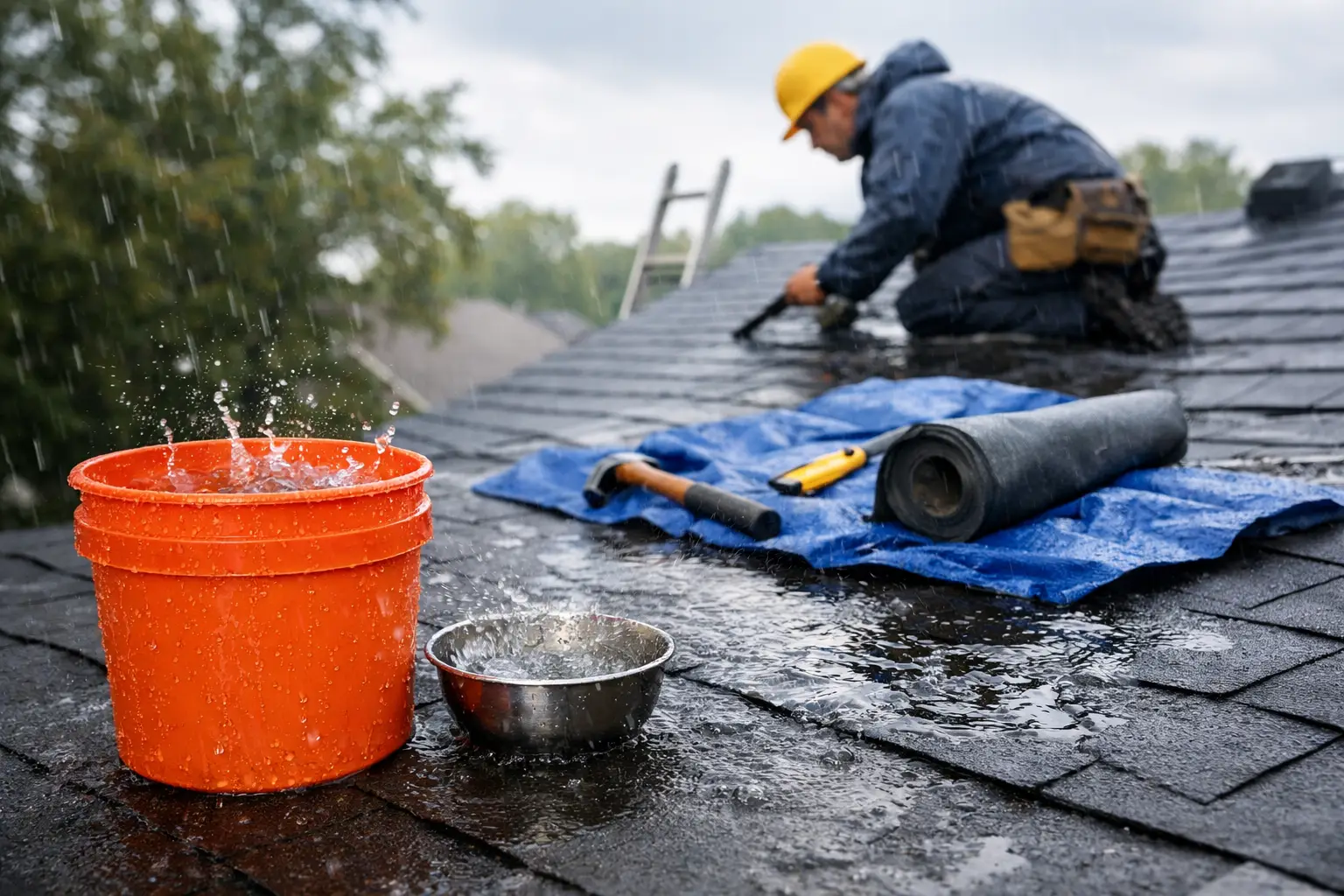
Water starts dripping in the middle of a storm, and suddenly a small roofing problem turns into a roof leak repair emergency. In Florida, that can happen fast. Heavy rain, lifted shingles, cracked flashing, clogged valleys, and storm debris can let water into places it should never reach. What you do in the first hour matters, not just for your roof, but for your ceilings, insulation, drywall, flooring, and even your electrical system.
The good news is that not every roof leak repair emergency means a full roof replacement. The bad news is that waiting usually makes the repair larger, more expensive, and more disruptive. The right response is simple, calm, and quick.
What counts as a roof leak repair emergency?
A roof leak becomes an emergency when active water intrusion is happening now or is likely to worsen before normal repair scheduling makes sense. If water is entering your home or commercial building during a storm, if part of the roof was torn open by wind, or if a ceiling is bulging with trapped water, you are past the point of monitoring it.
Some emergencies are obvious. Water dripping from a light fixture, stained drywall that suddenly expands, soaked attic insulation, or visible storm damage after high winds all need immediate attention. Other cases are less dramatic but still urgent. A leak around a chimney flashing, vent boot, skylight, or roof valley can start small and still cause hidden damage behind walls and above ceilings.
In Central Florida, a roof leak repair emergency often shows up after strong wind-driven rain instead of a massive roof failure. That is why homeowners are sometimes caught off guard. The roof may look mostly intact from the ground, but one lifted shingle or one failed flashing detail can let in a surprising amount of water.
What to do first during a roof leak repair emergency
During a roof leak repair emergency, start inside the property first. Move furniture, electronics, rugs, and valuables away from the leak area. If water is dripping steadily, place buckets or containers under it and use towels to reduce slipping hazards. If the ceiling is bubbling or sagging, that means water may be pooling above the drywall. In some situations, carefully draining that bulge can prevent a wider ceiling collapse, but only if you can do it safely and the area is clear below.
If water is near light fixtures, outlets, or appliances, treat it as an electrical risk. Shut off power to the affected area if you can do so safely. If you are unsure, leave it alone and call for professional help.
Then document what you see. Take photos of the interior damage, the active leak, and any visible exterior storm damage from the ground. That record can help with repair planning and, when applicable, insurance support.
The next step in any roof leak repair emergency is to call a qualified local roofer. Not a handyman guessing at the source, and not an out-of-town storm crew chasing the weather. A local, licensed contractor understands how Florida roofs fail under heat, rain, and wind, and they are still here after the storm passes.
What not to do
During a roof leak repair emergency, the biggest mistake is climbing onto a wet roof during bad weather. That is how people get seriously hurt. Even a single-story home becomes dangerous when shingles are slick, underlayment is exposed, or debris is underfoot.
Another common mistake is assuming the leak is directly above the water spot on the ceiling. Water travels. It can enter at one point and run along decking, rafters, or framing before it shows up indoors. Patching the wrong area wastes time and can let the real damage continue.
It is also smart to avoid quick-fix products as a long-term solution. Roof cement, caulk, and store-bought sealants have their place as temporary measures, but a roof leak repair emergency needs proper diagnosis. A leak caused by flashing failure, underlayment damage, or storm-lifted materials will not be solved for long by smearing sealant on the surface.
How roofers handle an emergency leak
A professional response to a roof leak repair emergency usually starts with damage control, then diagnosis, then permanent repair. If weather is still active, the first goal may be temporary protection. That can mean emergency tarping or securing exposed areas to stop additional water intrusion until a permanent repair can be completed safely.
After that, the roof needs a close inspection. A good roofer looks beyond the visible leak point and checks the surrounding system: shingles or metal panels, flashing, sealant points, valleys, penetrations, underlayment, decking, and ventilation-related moisture issues. On a storm-damaged roof, they also look for less obvious signs like creased shingles, lifted fasteners, or impact damage.
Permanent repair depends on the source. Sometimes it is a straightforward flashing replacement or a section repair. Sometimes water has compromised decking, insulation, or multiple roof components, which turns a simple repair into a more involved project. This is where honesty matters. You want a contractor who can tell you when a repair is enough and when a larger fix is the smarter investment.
Roof leak repair emergency or full replacement?
Whether a roof leak repair emergency calls for a repair or a full replacement depends on the age of the roof, the extent of the damage, and whether the problem is isolated or widespread. A newer roof with one storm-damaged section may be a strong repair candidate. An older roof with repeated leaks, brittle materials, and soft decking may be telling you it is time to stop patching.
The trade-off is cost today versus cost over time. A targeted repair is usually less expensive upfront. But if the roof is nearing the end of its service life, repeated emergency calls and interior damage can cost more than addressing the bigger issue once.
This is especially true in Florida, where roofs take a year-round beating from sun, humidity, heavy rain, and hurricane-season winds. A repair should solve the problem, not just buy a few weeks.
Insurance and storm-related leaks
If a roof leak repair emergency followed a storm event, your next steps may include an insurance claim. That does not mean every leak is covered, and it does not mean you should wait to protect the property. Preventing additional damage is still your responsibility as the property owner.
Strong documentation helps. Photos, videos, the date the leak started, and notes about visible storm conditions can all support your claim. A roofing contractor with storm-damage experience can also help identify whether the leak appears related to wind, impact, or wear and tear. That distinction matters because insurance policies usually treat them differently.
Just be careful about anyone promising a free roof in the middle of storm season. High-pressure sales tactics are common after severe weather. A trustworthy local contractor will inspect the roof, explain the damage clearly, and give you realistic guidance instead of making promises they cannot control.
Why local experience matters in Florida
A roof leak repair emergency in this region is not always about age alone. It is often tied to weather patterns unique to the area: fast-moving storms, wind-driven rain, extreme UV exposure, and seasonal downpours that test every weak point on the roof.
That is why local knowledge matters. A contractor serving homeowners in places like DeLand, Daytona Beach, and Port Orange has seen the same storm patterns, common installation mistakes, and material failures that affect roofs across Central Florida. They know where leaks tend to start, which repair methods hold up, and how to act quickly when weather is still moving through.
At GRIT Roofing, that local accountability is part of the job. When your roof is leaking, you do not need guesswork. You need a crew that shows up, finds the source, protects the property, and repairs it the right way.
How to reduce the chance of the next emergency
Not every roof leak repair emergency can be prevented, especially after severe weather, but many emergency calls start with issues that were quietly developing for months. Routine inspections catch loose flashing, cracked pipe boots, exposed fasteners, deteriorated sealant, and storm wear before water gets inside.
This matters even more if your roof is older, if you have large trees near the home, or if you have already had one repair in the same area. One leak is sometimes an isolated event. Repeated leaks usually mean the roof system needs a broader look.
A free roof inspection after a major storm or before hurricane season can give you a much clearer picture of what you are working with. Sometimes the best roof leak repair emergency is the one you never have to face, because the problem was found early.
When water starts coming through the ceiling, speed matters, but so does choosing the right help. Protect the inside, stay off the roof, document the damage, and get a qualified local roofer involved as soon as possible. A fast, honest response to any roof leak repair emergency can be the difference between a manageable repair and a much bigger rebuild.