
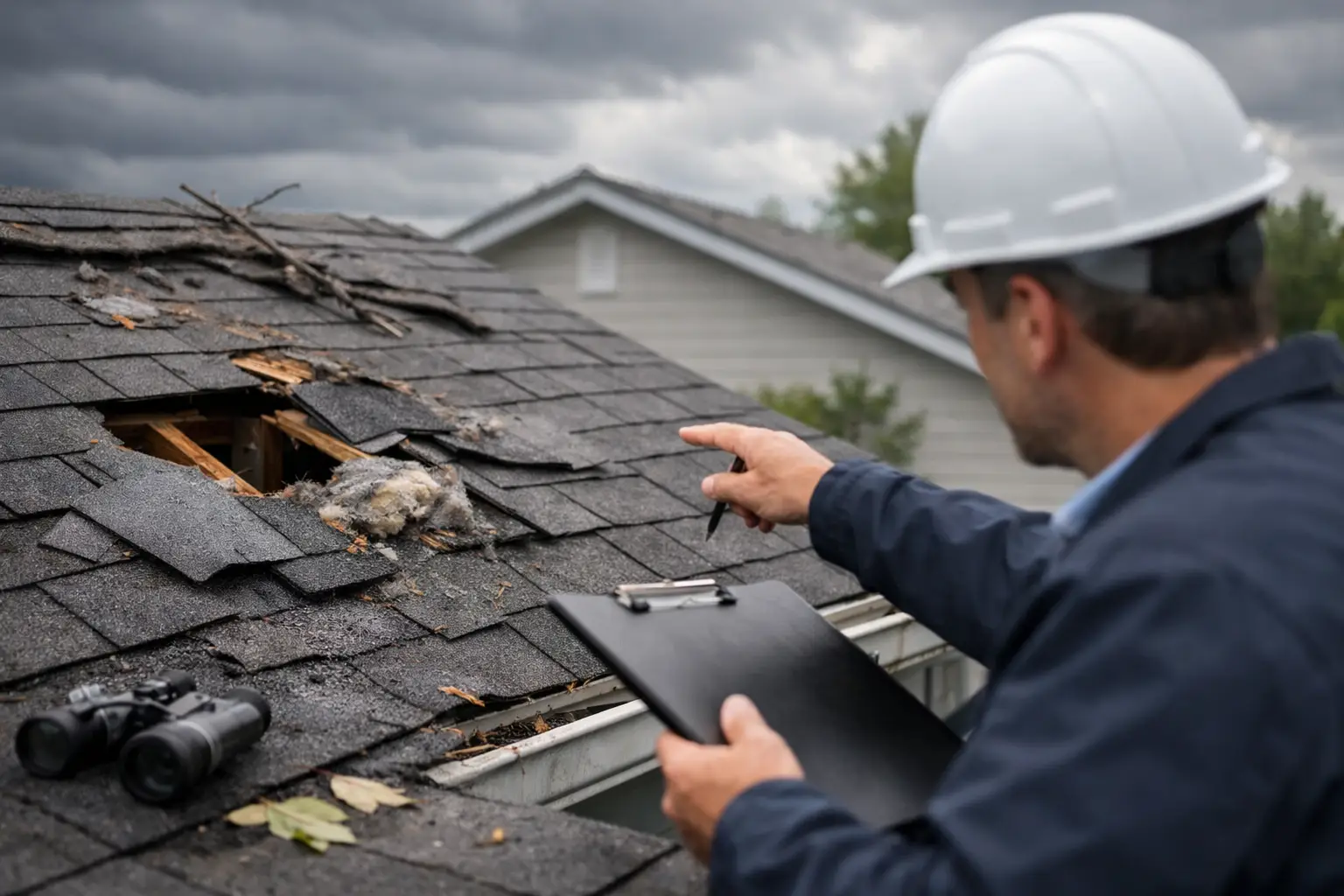
The storm passes, the sun comes back out, and from the driveway everything looks fine. That is exactly why roof damage gets missed so often in Central Florida. If you are wondering how to spot roof storm damage, the first thing to know is this: not all damage looks dramatic. A few lifted shingles, a small puncture, or granules washing into a gutter can turn into leaks, rot, and insurance headaches if nobody catches them early.
Florida roofs take a beating from wind, heavy rain, hail, heat, and flying debris. Sometimes the signs show up right away. Sometimes they do not appear until the next hard rain. A careful inspection, done safely and at the right time, can help you catch trouble before it spreads.
Table of Contents
How to spot roof storm damage from the ground
Start where it is safest – on the ground. Walk the perimeter of your home and slow down enough to really look. After a storm, many homeowners focus on fallen branches and fencing, but the roof often tells the bigger story.
Look for shingles that appear missing, curled, cracked, lifted, or out of line with the rest of the roof. On asphalt shingle roofs, wind damage often shows up as tabs that bend upward or tear loose at the seal line. If one section looks uneven compared to the rest, that is worth paying attention to.
Check for debris impact too. Tree limbs, even smaller ones, can bruise shingles, crack tiles, dent metal panels, or damage flashing around valleys and roof edges. You may also notice pieces of roofing material on the ground. Finding shingle fragments, broken tile pieces, or exposed nails in the yard is a strong sign the roof took a hit.
Do not ignore the gutters and downspouts. If you see an unusual amount of asphalt granules collected there, the storm may have stripped the protective surface off your shingles. A little granule loss is normal on older roofs, but heavy accumulation right after a storm is different. It can mean the shingles are aging fast or were damaged by hail and wind.
Signs of storm damage inside the house
A roof problem does not always announce itself outside first. Sometimes the clearest signs show up indoors, especially after wind-driven rain.
Head into the attic if you have one. Look for water stains on the underside of the roof deck, damp insulation, dark streaks, moldy smells, or actual daylight coming through. Even a small pinhole of light can mean a path for water.
Inside your living spaces, check ceilings and upper walls for yellow or brown stains, peeling paint, bubbling drywall, or warped trim. These signs do not always mean a major roof failure, but they do mean moisture is getting where it should not. The tricky part is that a leak may show up several feet away from the actual roof damage, so the stain you see is not always directly below the problem.
If you notice a new drip during or after a storm, document it right away. Take clear photos, note the date, and pay attention to whether the leak appears during heavy rain only or after sustained rainfall. That pattern can help a roofing professional narrow down the source faster.
The most common types of roof storm damage
Not all storms damage roofs in the same way. Wind, hail, and debris each leave a different fingerprint, and knowing the difference helps you understand what you are looking at.
Wind damage
Wind is one of the biggest roofing threats in Florida. It can loosen shingle seals, lift edges, and create openings that let water work underneath. The damage may look minor at first. That is the problem. A shingle that has been creased or partially lifted may still be attached, but it is already compromised.
On tile roofs, wind can shift tiles enough to break the weather barrier underneath. On metal roofs, strong gusts can loosen fasteners or flashing if the system was already aging or stressed.
Hail damage
Hail is less common in some parts of Central Florida than straight-line wind, but when it happens, it can be expensive. On asphalt shingles, hail often leaves dark spots where granules were knocked away. You may also see soft bruises or dents that are easier to feel than see. Metal roofs, vents, gutters, and flashing can show visible denting.
The challenge with hail is that cosmetic damage and functional damage are not always the same. Some dents may not affect performance much, while granule loss on shingles can shorten the roof’s life. That is where a trained inspection matters.
Debris damage
Falling limbs and wind-thrown objects can crack, puncture, or scrape roofing materials. This kind of damage is often easier to spot, but it can still extend beyond the obvious impact area. A branch that hits one slope of the roof may also damage ridge caps, flashing, soffit, fascia, or gutters.
How to spot roof storm damage without putting yourself at risk
A lot of homeowners make the same mistake after a bad storm – they grab a ladder too soon. Wet roofs are slippery, storm debris is unstable, and hidden structural damage can make walking the roof dangerous.
If you are doing a basic check yourself, stay on the ground or use photos from a safe vantage point if possible. Binoculars can help. If you need a closer look, use a ladder only to inspect the roof edge and only if conditions are dry and stable. Never walk a storm-damaged roof unless you are properly trained and equipped to do it.
This matters even more after hurricanes and severe summer storms. What looks like a small issue can involve loosened decking, compromised flashing, or soft spots hidden under the surface. Saving a service call is never worth a fall.
When the damage is subtle but still serious
One reason homeowners delay action is because they expect storm damage to be obvious. Sometimes it is not. A roof can survive the storm visually but still lose years of service life.
For example, shingles may look mostly intact from the yard while the adhesive seal strips have failed. Flashing may separate just enough to let in water during the next hard rain. Fasteners may back out. Protective granules may be stripped away in patches that do not jump out until leaks begin later.
This is especially true on older roofs. If your roof was already near the end of its lifespan, a storm may not destroy it in one shot. It may simply push it past the point where repairs make financial sense. That is why age, material type, and pre-storm condition all matter when evaluating what comes next.
What to do after you spot possible storm damage
Start with documentation. Take photos of anything you can safely see, including missing shingles, dented metal, fallen branches, interior stains, and debris around the property. Write down the date of the storm and any changes you noticed afterward.
If water is actively coming in, protect the inside of the home first. Move valuables, place buckets where needed, and limit further damage if you can do so safely. Temporary mitigation matters.
Then schedule a professional roof inspection. A qualified local roofing contractor can tell the difference between normal wear and actual storm-related damage, and that can make a big difference if an insurance claim becomes part of the process. It also helps to work with a local company that understands Florida code requirements, wind exposure, and what storm damage typically looks like in this area. After major weather events, out-of-town crews often flood the market. Some are legitimate. Some are not. Local accountability matters when warranty work, follow-up repairs, or claim documentation are on the line.
Why fast action saves money
Roof storm damage rarely gets better with time. A lifted shingle can become a leak. A minor leak can become wet insulation, stained ceilings, wood rot, and mold growth. What might have been a straightforward repair can turn into interior work, decking replacement, and a larger insurance dispute.
Quick action does not always mean a full roof replacement. Sometimes a focused repair is all that is needed. Other times, especially on older roofs with widespread wind or hail damage, replacement is the smarter long-term choice. The right answer depends on the age of the roof, the extent of the damage, and whether the system can still protect your home the way it should.
If a recent storm has you second-guessing what you are seeing, trust that instinct. A good inspection gives you clarity. And when your home in DeLand or the surrounding Central Florida area is on the line, peace of mind is worth getting the facts from a contractor who will still be here long after the weather clears.